
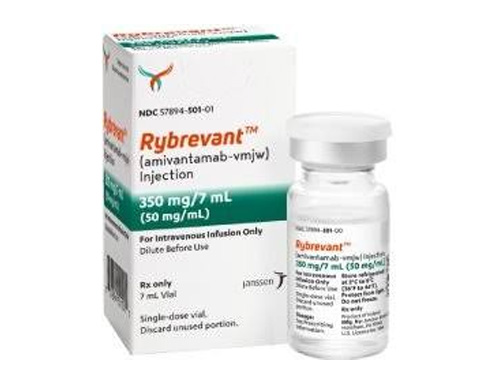
These findings support the ongoing pivotal Phase 3 OrigAMI-5 study and further expand the clinical development programme for subcutaneous amivantamab for patients with head and neck cancer.
Among patients with HNSCC other than HPV-associated OPSCC, results demonstrated a confirmed overall response rate (ORR) of 77%, including 14% achieving complete responses.1 Tumour shrinkage was observed in all evaluable patients, and nearly two-thirds of responses remained ongoing at a median follow-up of 10.6 months.1 These findings were presented as a rapid oral presentation at the European Society for Medical Oncology (ESMO) Congress 2026 (Abstract #1539RO).
Unmet need remains in first-line head and neck cancer treatment
For people with recurrent or metastatic head and neck cancer, the first-line treatment decision after progression comes at a critical point in an aggressive disease often associated with poor prognosis.3 While some patients benefit from the current standard of care, many experience disease progression while facing symptoms that can profoundly affect daily life, including the ability to eat, swallow and speak.4,5 Nearly 60% of patients do not go on to receive subsequent treatment, underscoring the need to help more patients achieve meaningful tumour reduction and durable responses from the start.3
Expert and company perspectives on the role of amivantamab in advancing first-line treatment
“Patients with recurrent or metastatic head and neck cancer continue to face a poor prognosis, highlighting the need for new treatment approaches,” said Kevin Harrington, M.D., Ph.D., Professor of Biological Cancer Therapies at The Institute of Cancer Research and The Royal Marsden NHS Foundation Trust.* “The data presented from Cohort 5 of the OrigAMI-4 study are promising, with the triplet combination of amivantamab, a PD-1 inhibitor and chemotherapy demonstrating encouraging response rates, ongoing responses and early survival findings in patients with HPV-unassociated tumours in the recurrent or metastatic first-line setting. These findings offer an opportunity to explore how we might improve outcomes for patients with this challenging disease.”
“We’ve already seen what subcutaneous amivantamab may offer patients with head and neck cancer after their disease has progressed. Now, we see the potential impact of using this approach earlier in recurrent or metastatic disease,” said Yusri Elsayed, M.D., M.H.Sc., Ph.D., Global Therapeutic Area Head, Oncology, Johnson & Johnson. “Our experience with amivantamab in lung cancer has helped establish the potential of dual EGFR/MET targeting, and these results support continued evaluation of this approach in head and neck cancer.”
"People living with recurrent or metastatic head and neck cancer need treatments that can deliver meaningful benefits from the very beginning of their treatment journey," said Henar Hevia, Ph.D., EMEA Therapeutic Area Head, Oncology, Johnson & Johnson. "These results reinforce our ambition to raise expectations of what might be possible for patients with this challenging disease and give us further confidence to advance subcutaneous amivantamab in the recurrent or metastatic first-line setting, as we continue to evaluate this approach in Phase 3."
Amivantamab demonstrates meaningful anti-tumour activity in first-line disease
Cohort 5 of the OrigAMI-4 study evaluated subcutaneous amivantamab in combination with pembrolizumab (PD-1 inhibitor) and up to six cycles of carboplatin in previously untreated patients with recurrent or metastatic HNSCC.1 Patients received treatment every three weeks following the initial treatment period, with an administration time of five minutes or less.1 The primary endpoint was ORR, as assessed by investigators using Response Evaluation Criteria in Solid Tumours version 1.1 (RECIST v1.1).**1 Response rates were assessed separately in patients with HPV-associated OPSCC (n=7) and patients with all other forms of HNSCC (n=22), given known differences in how these patient populations respond to EGFR-targeted bispecifics.1
Thirty patients received subcutaneous amivantamab in combination with pembrolizumab and carboplatin, and 29 were included in the efficacy analysis.1 One patient was deemed ineligible.1 Among 22 patients with forms of HNSCC other than HPV-associated OPSCC, the confirmed ORR was 77% (95% confidence interval [CI], 55-92), including complete responses in 14% and partial responses in 64%.1 Responses occurred at a median of 9.4 weeks, with 65% ongoing at a median follow-up of 10.6 months.1 Four patients (18%) had stable disease and one (5%) had progressive disease.1 Median overall survival was not reached and 77% of patients were alive at one year.1 The remaining seven patients had HPV-associated OPSCC, with an ORR of 29% (95% CI, 4-71).1
The safety profile of subcutaneous amivantamab in combination with pembrolizumab and carboplatin was consistent with the individual agents.1 The most common adverse events were anaemia (73%), hypoalbuminaemia (63%), thrombocytopenia (63%) and stomatitis (57%).1 Administration-related reactions associated with subcutaneous amivantamab occurred in 13% of patients, with no Grade 3 or higher events reported.1
The Cohort 5 findings build on earlier first-line results from the OrigAMI-4 programme, including Cohort 2 data evaluating subcutaneous amivantamab in combination with pembrolizumab recently published in Clinical Cancer Research.6
About the OrigAMI-4 Study
OrigAMI-4 is an open-label Phase 1b/2 study evaluating subcutaneous amivantamab in recurrent or metastatic head and neck squamous cell carcinoma (R/M HNSCC).7 The study includes six cohorts, including Cohort 5, which studied subcutaneous amivantamab across different treatment settings and regimens.1 Cohort 5 of the OrigAMI-4 study evaluated subcutaneous amivantamab, administered every three weeks, in combination with pembrolizumab and carboplatin in patients with R/M HNSCC receiving first-line treatment whose tumours tested positive for programmed death-ligand 1 (PD-L1), with a combined positive score (CPS) of one or greater.1 The primary endpoint was ORR, as assessed by investigators using Response Evaluation Criteria in Solid Tumours version 1.1 (RECIST v1.1).1
About Head and Neck Squamous Cell Carcinoma
HNSCC is the most common form of head and neck cancer, a group of cancers that arise in the mouth, throat, voice box, sinuses, nasal cavity and salivary glands.8 It represents approximately 4.5% of all cancers worldwide and is the seventh most common cancer globally.8 Major risk factors include tobacco and alcohol use, as well as infection with high-risk HPV.8 Around 75% of cases are HPV-unassociated, which is typically linked with a poorer prognosis and reduced response to treatment.9,10 Despite advances in surgery, radiation, chemotherapy, and immunotherapy, many patients ultimately progress to advanced, recurrent or metastatic disease.11
About Amivantamab
Amivantamab is a fully-human EGFR-MET bispecific antibody that acts by targeting tumours with activating and resistance EGFR mutations and MET mutations and amplifications, and by harnessing the immune system.12,13,14
The European Commission (EC) has approved amivantamab in the following indications (intravenous and subcutaneous):
- In combination with lazertinib for the first-line treatment of adult patients with advanced non–small cell lung cancer (NSCLC) with EGFR exon 19 deletions or exon 21 L858R substitution mutations.
- In combination with carboplatin and pemetrexed for the treatment of adult patients with advanced NSCLC with EGFR exon 19 deletions or exon 21 L858R substitution mutations after failure of prior therapy, including an EGFR tyrosine kinase inhibitor (TKI).
- In combination with carboplatin and pemetrexed for the first-line treatment of adult patients with advanced NSCLC with activating EGFR exon 20 insertion mutations.
As monotherapy for the treatment of adult patients with advanced NSCLC with activating EGFR exon 20 insertion mutations after failure of platinum-based therapy. - Subcutaneous amivantamab is co-formulated with recombinant human hyaluronidase PH20 (rHuPH20), Halozyme’s ENHANZE® drug delivery technology.
About Johnson & Johnson
At Johnson & Johnson, we believe health is everything. Our strength in healthcare innovation empowers us to build a world where complex diseases are prevented, treated, and cured, where treatments are smarter and less invasive, and solutions are personal. Through our expertise in Innovative Medicine and MedTech, we are uniquely positioned to innovate across the full spectrum of healthcare solutions today to deliver the breakthroughs of tomorrow, and profoundly impact health for humanity.
For more information please visit, https://www.jnj.com/innovativemedicine/emea/


